

Almost in NY

| 0 Comments
Time flies when you are on the train and have EVDO :). As you can see I am almost at my destination. I have numerous meetings I am looking forward to. More to come.

Blogged via wireless handheld.

12191532021.jpg
Social networking does well when it plays on people's passions. If you agree, then you will further agree that politics is one of those areas that makes people extremely passionate.

Having said that, I should further point out the similarities between a political campaign and a corporate marketing campaign.

Just as your company has to constantly strive to keep up with new communications mediums such as Wikipedia, text messaging and a slew of others, political candidates must do the same.

This is all well and good but it seems that only Barack Obama is utilizing all the tools of integrated marketing in his campaign. In addition it seems the Obama campaign's ability to mobilize micro-support or the support of small clusters of people in different parts of the country will enable him to achieve feats his rivals cannot.

In this case, rival number one is John McCain. To get a better idea of what Obama is doing, read this article. I can't help but wonder why Democrats seem to be so far ahead of Republicans when it comes to technology.

If John McCain wants to win this election, he really needs to be sure to utilize all aspects of integrated marketing such as text messaging while simultaneously engaging in social media via numerous networks. Finally, he needs to ensure there is a two-way conversation between supporters and his campaign.

If this turns out to be a close election, virtually all votes will count.

So too in the competition between businesses, every purchase counts. Be sure to utilize all aspects of integrated marketing to ensure your corporate success.

See Also:

Facebook Benefits Obama Most

Heading to SpeechTek

| 0 Comments

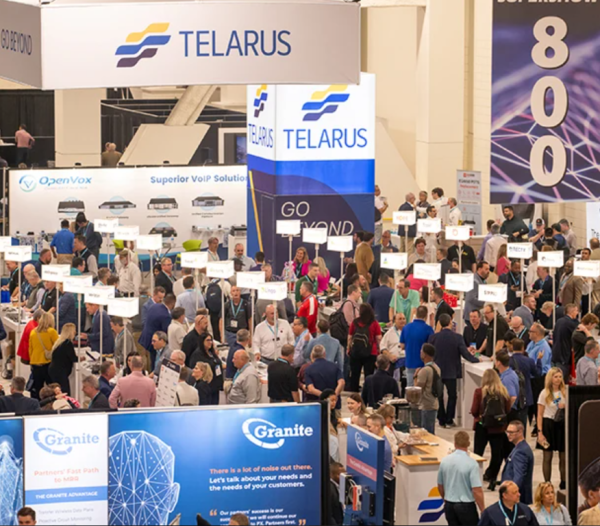
I am heading to New York, back from Channel Partners and onto SpeechTek in Manhattan. More to come soon.

Blogged via wireless handheld.


12191436021.jpg
12191436022.jpg
12191436023.jpg


What is the future of communications? One acknowledged thought leader in our field is Thomas Howe and his consulting company which bears his name is the place you go when you want to know. Howe and I were recently on a panel together at a conference in San francisco and I was very impressed with what he had to say so I invited him to be be my guest on a podcast.

Some of the takeaways from our discussion are that voice mashups are becoming more common and voice will transcend CEBP or communications enabled business processes to the realm of the consumer as well. As this happens, communications becomes the condment to virtually all applications.

The excitement here is how this will happen. Who will be the winners and losers as communications ends up everywhere? Certainly BT sees this transformation and this is one of the reasons the company purchased Ribbit. Be sure to listen to Howe's perspective on how other service providers will respond.

If you are looking to learn more about the future of communications be sure to come to ITEXPO September 16-18, 2008 in Los Angeles and while you are there you can stop buy booths at the collocated Communications Developer Conference.

While you are there be sure to say Hi to Thomas and me as well. See you soon.

Open Source Communications War

| 1 Comment
Behold the open source communications wars. In this corner weighing in at millions of downloads is Digium... A Huntsville, Alabama purveyor of all things Asterisk... From training to support to hardware, you name it.

In the other corner with decades of international experience and engineering and a strong alliance with IBM/Microsoft is Nortel/PingTel.

Last week we saw comments from Nortel on why they acquired PingTel and why this solution is better than the "old Asterisk".

One would imagine this comment was the straw that broke the camel's back:

By the way, these strategies dictated why sipXecs was chosen over Asterisk, a clearly inferior open source environment.

Today, Digium's Bill Miller responds...

Blog Response for The Hyperconnected Enterprise Post


Presented with the disruptive threat of open source Asterisk, and the recent momentum seen in commercial channels and the enterprise, Nortel acquired sipXecs. Can you buy your way into open source credibility? Nortel's not the first old-line company to try. Is open source a marketing bullet point for Nortel ? Its certainly not inherent behavior that's woven into the fabric of the company!


Hey, I can't blame them -- if you were Nortel, and saw Digium and Asterisk on one side and Microsoft on the other, threatening to eat into your core business, what would you do?


So: Bravo, Nortel!  Welcome to the next generation of telephony. But you'll need to learn the strengths and limitations of what you just bought. As we have learned from our commercial customers as well as the countless numbers of Open Source Asterisk installations, SIP is not the entirety of UC. True, Asterisk isn't a SIP proxy -- because a SIP proxy alone cannot provide services the world has come to expect from phones.


To pick a specific example of the rather misleading comments in your article: It's incorrect when you claim that all Asterisk calls go through a centralized system. We assume you've just been misinformed, but your claim that Asterisk is designed to always handle media streams is just incorrect. You should recognize that the Asterisk rhetoric from the sipXecs and FreeSwitch teams refers to Asterisk over 4 years and several versions ago when they last looked at the feature set. In some cases, the Pingtel/sipXecs team in particular likes to compare against specific SMB packaged systems and not native Asterisk, which would provide a more "same page" comparison. The SCS500 scales to 500 users. It certainly does not need the power already in Asterisk today.


Let's talk real numbers. Asterisk community members have quickly created testbed platforms which process  300 SIP calls per second capacity. When RTP is managed by an Asterisk instance, we have demonstrated as many as 1900 concurrent  G.711 channels on inexpensive off-the-shelf hardware. The open source versions of Asterisk were designed to handle hundreds of thousands (yes, hundreds of thousands) of end users in different circumstances, spread across multiple machines with functional role distribution in a way completely unlike a PBX.  Of course, smaller SMB solutions are selling well for our Switchvox line as well as a dozen or more other companies who repackage Asterisk with limited hardware or license caps - that is their business.   But please be a bit more forthcoming in your comparisons - Asterisk is being run in systems spanning huge user PBX and service delivery populations.


For sipXecs to compare themselves against the pre-packaged SMB offerings of Asterisk in different flavors is misleading. That's like saying the Apache web server on my embedded-processor webcam can only handle 2 simultaneous streams, therefore Apache doesn't scale on any platform. So while Asterisk can serve as a PBX, it can (and for countless customers and projects already does) also serve as an incredibly flexible service-delivery platform for UC services, custom application development, or carrier VoIP integration. It can be used on even the smallest embedded platforms (Linksys WRT54G, AA50) or on the largest voice server farms such as Integrics' Enswitch which directly supports over 100,000 end points and over 6,000 concurrent calls just for one of their 40+ customers and integrates easily through Asterisk APIs to multiple billing solutions.


As the "wildcard" name suggests, Asterisk works with numerous protocols and codecs. When required for communication between disparate endpoints, Asterisk will intelligently negotiate and transcode between them. If the two are compatible, Asterisk will hand off the call and get out of the way. Asterisk has the flexibility of handling media if desired, but RTP between endpoints is the preferred design for larger systems, including video, which Asterisk has handled for several years now.


In contrast, the sipXecs architecture enforces the requirement that all endpoints be uniform, which pulls along all sorts of ugly forklift-upgrade requirements for businesses looking to grow into the future, or uses expensive media gateways to do what Asterisk can do in software. We can confidently say that Asterisk does UC and that sipXecs is simply a SIP platform that requires lots of other moving parts to get the job done. Don't take our word for it--read their comparison posts, which say sipXecs needs other components to complete their system. Asterisk handles the "U" in UC  (as well as the "C") and has for some time now.


The only claim that seems to be correct in Tony Rybczynski's post is that for large Asterisk installations, there is no comprehensive management interface for all possible aspects of the system.  There are multiple web-based interfaces available for small/medium enterprise PBX-style installations - FreePBX is the most popular open source tool, and Digium's Switchvox being an excellent representative of a commercial packaging. Both of these examples include automatic phone configuration and provisioning.  However, Digium has found that large enterprise developers who wish to harness the true power of the system typically want to have call control at a much more fundamental level than what a GUI typically offers or what a vendor might consider "simplified." Therefore, Asterisk is available as a telephony toolkit - a suite of programs and fundamental tools that allows a developer to quickly deploy new voice apps or extend existing legacy platforms if they so choose - it is as flexible as the circumstances require.


One final observation counterpoint to a comment you made: As the progenitors of the venerable DMS-100, Nortel should know by now that the age of code -- or lines of source -- mean nothing when compared against other software. Do more lines of code indicate more features or quality? Do fewer lines evidence efficient, bug-free code? Lines of code are typically irrelevant in doing anything other than measuring platforms against themselves over time or measuring individual coding productivity.


It's going to take more than this acquisition to, as Tony says, solidify Nortel's "leadership in the global open source ecosystem." We hope that this purchase creates a more viable and useful application that can be used by the open source community - we hope this isn't a repeat of the Vovida(Vocal)/Cisco purchase and subsequent smothering. But for the sake of the open source telephony movement that Digium started, Nortel, we welcome you to the open source revolution.

Iwatsu Update

| 0 Comments
Dallas is home to one of the largest assortments of communications companies anywhere. Sure, Israel, Silicon Valley, New Jersey, Canada and even Massachusetts have many companies in the space as well but you know what they say about Texas - everything is bigger.

Contrasted to Silicon Valley where companies seem to pop up and then get acquired by Cisco or Oracle faster than the time it will take you to read this article, Dallas has some telecom companies which have been around for years.

So as you can imagine -- in order to do my job well as traveling editor, covering all that's important in communications and technology, I stop by Texas often.

One of my stops on my latest Dallas area road-trip was at Iwatsu, a 70+ year-old Japanese phone maker catering to the SMB. The company has high-quality phone systems and although they are not as well known in the US as they are in Japan, Iwatsu has a reputation for designing solid products.

While in the company's Irving headquarters I was shown some information on how energy efficient the company's phone systems are. Since the phone systems are convection cooled they are greener than much of the competition as they don't use fans. Equipment that does not use fans is almost always more reliable as well.

Iwatsu has never been afraid to use advanced technology and partner with other companies to give their dealers an edge. For example they resell a reverse 911 service allowing large amounts of people to be contacted in case of emergencies. This same service has been sold to retail companies as well. For example car dealers use the service to quickly contact existing customers when a new model comes out.

Another interesting area of focus for the company is phones and there is still a focus on providing TDM as well as IP endpoints. In fact, you can even send text messages to TDM endpoints.

In addition the company is adding bluetooth capability into some of its models and testing has been done with 50 different bluetooth headsets. The system software can even increase or decrease transmit and receive audio levels of the phones if needed

Iwatsu Voice Networks President David Carissimi shows off bluetooth features of Iwatsu phones
david-carissimi.jpg


The company's Gateway Server holds applications from call accounting to ACD and includes an SDK and all software comes with a 90 day free trial. For VARs this is the ultimate in puppy dog sales - you know, giving the puppy to a family to play with for a weekend always means they will come in Monday morning and buy it.

 
Iwatsu's Don Gant and Kevin Helleher are always happy to discuss the company's latest products

 don-gant.jpg

kevin-helleher.jpg

I also had a chance to look at the company's Precot phone which is one of the most advanced phones on the market. Sadly, It is only available in Japan at the moment.

The Precot has integrated videoconferencing, can offer a scalable web browser, touch screen/stylus support, support for click-to-dial from web pages, soft keyboard support, mouse support, external monitor support, S Video RCA video out/in and RCA audio out.

The semi-famous Iwatsu Precot phone

Precot_MOD.jpg 
 

With all these connectors, the phone seems as comfortable connected to your home stereo system as it is on your desk.

Another interesting feature of the device is the ability to control panning and zooming of remote video cameras via the phone. Finally, you can also associate other video cameras with phones on the network, meaning you could have a security camera aiming at a hallway phone associated with the hallway phone. So when a call comes in from this extension you could be watching the person making the call.

My Dallas trip was certainly very informative and one of the highlights was seeing how advanced the Precot phone is. Whether companies will actually pay for phones with such advanced features is the next question I am wondering about but I can see the security-based vertical markets as a natural for this phone. This means, schools, government, military and other segments of the market could be very interested in getting their hands on the Precot. I too am certainly hoping I get my hands on one if it does ever show up as a production model in the states.

Scenes of New England

| 0 Comments
Here are a few shots from my trip up to Boston. It is unbelievably green thanks to lots of rain. I may take some more shots if something interesting comes along. Interestingly I passed a mother and baby wild turkey while driving to the train station. Haven't seen a wild turkey in years.

Blogged via wireless handheld.

12190587011.jpg
12190587012.jpg
12190587013.jpg
12190587014.jpg
12190587015.jpg
12190587016.jpg


Traveling Today to Boston

| 0 Comments
I am off to Channel Partners in Boston today but before I go I thought you might find this article on hotels helping themselves to your money interesting. Since this has happened to me in the past I got to thinking the problem is not isolated. Enjoy.
apptrigger-headquarters.jpgAs service providers look to upgrade their infrastructure and build new networks, they have many decisions to make. One of these has to do with the revenue producing applications which currently exist on their network. Do they all need to be rewritten to work with the new network?

In many cases they do but if one company has it's way this will no longer be the case. A company named AppTrigger is looking to bring the old applications into the new world of next-generation networks while simultaneously allowing many of the next-gen services to be available to subscribers on legacy networks.

The company even rolled out a new program called the Application Session

apptrigger-management.jpg

Controller Advantage Program, a new integrated program that provides a construct for evaluating current application business models as service providers examine the risks and rewards of advanced network migration strategies.

Of course this begs the question, what is an Application Session Controller or ASC? To answer this question I travelled to Richardson, Texas where the company is based to learn more.

While there I spoke with Tamye Oshman Dir of Marketing, Wally Beck (blue shirt) Senior Director of Marketing and Patrick Fitzgerald (white checkered shirt), Senior Vice President Sales and Marketing and in my meeting on a scorching Texas day I got to learn about how the company evolved from a media gateway company into what they are today.

Moreover, I learned about how the company has partnered with Unisys and now Microsoft and their focus on North America, EMEA and APAC and Latin America.

But I promised to tell you about the ASC - it is a pre-IMS network element which sits between the application layer and Network Element.

The ASC allows an application such as enterprise VPN currently running on an IN network to be introduced on an IMS network without rewriting or repurchasing of the application.

I am told the ASC supports all the APIs (a bold statement but check with the company for details) and some media such as record, playback and SMS.

So should service providers work with a company like AppTrigger? It depends really. In a world which is getting more and more complicated for carriers, do you need to keep your applications more organized and maximize the revenue of each of them by allowing users on all networks to use them? Of course the decision is up to you but it seems logical that going forward, ASCs will become common network elements in many service provider networks. Once this happens, we should hopefully see more revenue potential for carriers and more opportunities to use disparate services regardless of the network they are on.

Without listing them all as their are too many, the recent outages of services from Amazon, Google and many others have people worrying about switching to hosted applications and moreover, some jobs may be at risk over decisions to go hosted.

Remember the good old days when no one got fired for buying IBM. Seems like the saying still goes for Microsoft and other non-hosted vendors.

For hosted providers, the tide is turning and if these companies don't get their collective act together, they will ensure a slower migration to software as a service or SaaS.

The problem is of course that a single hosting company having an outage such as SalesForce.com, Google or Amazon will scare potential customers away from even considering the move to servers which they do not control.

Sure the infrequent outage isn't a problem but we seem to be hitting a critical mass of these things and there is a record number of outages and worse -- record numbers of stories about hosted service outages.

Let's just say it seems like the SaaS space may soon take a pause if these outages don't stop soon.

See Also:

Gmail leaves Google Apps admins nervous

Apple, Amazon cloud snafus leave Microsoft sitting pretty
Google Docs Outage
Outages Force Cloud Computing Users To Rethink Tactics

HTC Dream Coming Soon

| 0 Comments
The much anticipated Google Android phone looks like it will finally see the light of day on the T-Mobile network. It is worth noting that some of the more interesting developments in the world of mobile phones have come from traditional computer companies. First, HTC a company known for making really leading-edge PDAs around the turn of the century got into the smartphone business and provided a solid alternative to traditional cell phone makers and phone from Treo/Palm/RIM (all three of which could be considered computer companies as well).

Then it was Apple and now Google. (I may lump Samsung in here as well but let's leave them out for now. Oh and HP deserves an honorable mention for the iPaq phone line)

So it seems that the HTC Dream will be in our hot little hands (well mine anyway -- hopefully -- I still don't seem to be able to procure a 3G iPhone. The store manager tells me I need to wait for the person who "erroneously" took my phone to come back and return it).

I have been a vocal advocate of adding a keyboard to the iPhone and it seems that both RIM and now Google are embracing the concept of a full touch-screen device with a keyboard. In this case it will be a 5-row keyboard which should make internet surfing easier than on an iPhone.

Still, one wonders if this new device will do something that The iPhone doesn't besides adding a keyboard. Moreover can't Apple just launch an iPhone-k which sports a keyboard as well?

We know Google has been courting developers for its Android platform and has even decided to anger the developer community as a whole in its efforts to have a robust suite of applications on the phone quickly.

HTC Dream, AKA GooglePhone, Gphone in Action


It seems that at the current pace there will be a battle for developers between Apple and Google not seen since the battle for developers which Apple and IBM OS/2 lost to Microsoft.

Speaking of Microsoft, let's not count them out... I would imagine they will re-energize themselves around the whole idea of getting more developers on their mobile platforms as well.

One thing is for sure... There is no shortage of competition in the mobile or mobile API world.

Visit often for the skinny on who is winning and who is losing.

Disclosure: I own Google shares